
Shaping the world through embroidery
- Date created:
- Update date:

Free, fun, and powerful. Atsumi's embroidery works, which combine elegance and humor, are filled with a mysterious charm that you won't forget once you see them. After gaining work experience, Atsumi has pursued her current path through self-study. In her studio, bathed in soft natural light, we asked her about her daily creative process and her thoughts on embroidery.
Express your individuality through free-style embroidery.

In response to the request to "show us your most cherished embroidery piece," the first item she showed us was a drawstring bag that looked like it had aged over time. Atsumi's name was embroidered on it in simple stitches.

"This is something my mother made for me when I was little. She embroidered my kindergarten and elementary school belongings, and I was so happy back then. Looking at it now, it's not very skillful, but I can really feel my mother's love in it."
Atsumi, whose free-spirited, original, and humorous works have garnered many fans, is surprisingly self-taught in embroidery, rather than having learned it from her mother. After graduating from Tama Art University, she worked for an apparel manufacturer before becoming a staff member at her alma mater. While working, she continued to create her own works as an individual, and it was during this time that she became captivated by the unique form of expression that is embroidery.
"At first, it was just one of many ways of expressing myself, but I found the embroidery process enjoyable and never boring, and I often received positive feedback. I had always wanted to work under my own name, so when I quit my job at the university, I made up my mind and decided to call myself an embroidery artist."


Atsumi's endeavor quickly caught the eye of an editor, and her first book, "Embroidery Emblems," was soon published. The subdued tones and fresh motifs became a hot topic, and it remains a beloved long-selling book.

Since then, I have consistently published books and artworks, while also leading a busy life as an embroidery artist, providing designs, developing products, collaborating with companies, and communicating through the media.

"Fifteen years ago, most embroidery artists were established masters, and young artists like me were rare. I was completely self-taught in embroidery, so people in the industry were often surprised by my choice of materials and how I handled them. But perhaps that's precisely why so many people found my work interesting, and why I was able to walk my own path without comparing myself to others."

"The '48 Sparkling Nishiki Thread Projects for Creating Colorful Ornaments,' supervised by Atsumi, is a luxurious kit that allows you to fully enjoy beautiful glitter thread embroidery. Nishiki thread is a very beautiful thread, but it can be a little more difficult to handle than ordinary embroidery thread, so I tried to create designs that would keep even beginners engaged and happy until the end. The key is to relax! If you rush, the thread will get tangled and you'll make mistakes, so try to enjoy the time you spend stitching gently, carefully, and with a calm mind."
Embroidery is a trace of someone's feelings.
Insects, trees, geometric patterns, and cheerful girls—the unique worldview that effortlessly transcends conventional images of embroidery, a world that can only be described as "typical of Atsumi," is filled with exhilarating joy. What kind of meticulous attention to detail goes into choosing the colors and motifs for the embroidery?


"I don't have any particular obsessions or rules, but since I'm the first person to see my own work, I try to create things that I enjoy stitching and that I want to see the most right now! And when other people also enjoy it as a result, I'm incredibly happy. I often come up with ideas while I'm working with my hands. As I'm putting those ideas into shape, new ideas are born, so I feel like the creative process is a continuous flow."

What process does it take for an idea that pops into your head to take shape? "I'm not good at drawing, so the preliminary sketches always take a lot of time. Even if the motif is real, I don't just use it as is for the sketch; I often filter it through my own perspective and output it as something that has never existed anywhere before, so it's quite difficult. When I can sharpen a vague image into focus, I'm really happy, and the subsequent work becomes very enjoyable. If I can't draw a good sketch, it means 'it's not the right time yet,' so I stop for a while and put it back in the drawer of my mind. Right now, there are lots of ideas sleeping in that drawer, waiting for the right time to be released into the world (laughs)."

Atsumi sometimes wonders what would happen if she were to embroider the scenery in front of her, the paintings she encountered in an art museum, or the movies she recently watched. Perhaps the secret to her unique worldview lies in her sensibility of reconstructing her connection with the world through embroidery. "There's still a long way to go, but after continuing for 15 years, I feel like I've gotten a little better at both painting and embroidery. The charm of embroidery is that it lasts a long time and exists all over the world. Whether in Japan or overseas, you're almost guaranteed to encounter embroidery when you walk around town. And just like how my mother once embroidered my name on a drawstring bag, those embroideries are traces of someone's thoughts and feelings. Just being aware of that makes me feel like my own world is expanding in a richer way."
Nishiki-ito, which allows you to create ornaments supervised by Atsumi, is now on sale!

Enjoy the sparkling, beautiful glitter thread "Nishikiito" in this special set. You can create ornaments designed by Atsumi using "Nishikiito" and collect 48 colors of Nishikiito over 12 months, with 4 colors added each month.

Embroidery artist / Atsumi
After graduating from Tama Art University, she began her career as an artist after working for an apparel manufacturer and the university. In addition to holding solo exhibitions of her embroidery-based works, she is active in a wide range of fields, including collaborative work with artists and companies, the embroidery thread brand "ototoito," and supervision of the web content "See Sew project." She has authored numerous books, including "Embroidery of a Family Spun with Black Thread" (Bunka Publishing Bureau).
The products featured in this article are listed here.
A playful array of colors: 48 sparkling designs that can also be used to make ornaments. (Nishikiito no Kai)
Enjoy the sparkling, beautiful glitter thread "Nishikiito" in this special set. You can create ornaments designed by Atsumi using "Nishikiito" and collect 48 colors of Nishikiito over 12 months, with 4 colors added each month.

"Couturier Club" registration fee (annual registration)
Join the "Couturier Club" and enjoy tons of great member benefits for just 100 yen a month! Enjoy introductory prices on your first purchase, and our monthly newsletter, "Couturier's Seeds," is packed with fun and useful information, including seasonal crafting ideas, original works by artists, and crafting techniques. We look forward to you joining the "Couturier Club" and enjoying crafting together!
SHARE


Related article

Mystery SAL "Couturier Mystery Animal" Embroidery Pattern ③
Mystery SAL

Embroidery patterns available for free! Couturier 20th Anniversary Special Project "Mystery Forest" Episode 9
Cross stitch

The allure of beads: Announcement of the 'Bead Art Show' to be held in Kobe
Bead crafting

How to do Swedish embroidery, with its beautiful patterns and thread gradations.

[Free Pattern] A cheerful, frilly fringe bag with colorful ribbons and embroidered accents!
クチュリエの種

Why not incorporate it into your daily life? A collection of embroidery kits featuring Scandinavian design.
Embroidery
Articles I recently read

If you feel like doing some handicrafts (handmade crafts),
To the Couturier Shop

Shopping
Once you get hooked, you'll be completely engrossed!
These kits are long-selling and popular items at Couturier. From knitting and joining pieces to creating and wearing them, and enjoying various arrangements, there's a wide selection of kits that will have you completely hooked.
Shopping
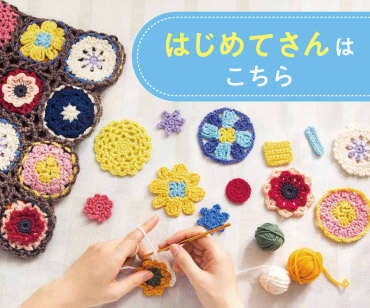
For those new to handmade crafts, click here.
We want many people to experience the joy of making things by hand. That's why we have a wide selection of beginner-friendly lesson kits in our "Basics for Beginners" series.
Shopping
お す す め コ ン テ ン ツ
Shop for craft and DIY kits and handmade goods here.
Shopping
編み物
I want to knit every day, I want to knit all year round.
Shopping
The sun
You're sure to find an embroidery design you want to try!
Shopping
Sashiko
Sashiko embroidery, popular for its traditional patterns and characters.
Shopping
Sewing
A collection of tips and solutions for sewing and sewing problems.
Shopping
Accessories
Handmade accessories
Shopping
Craft
Crafts, handcrafts that don't require needles and thread
Shopping
ミ ニ チ ュ ア
Small, cute, heart-fluttering miniatures
Shopping
Beginner kit
Learn to do it! Popular beginner kit

Shopping
Couturier Shop Site
Shopping
Sales campaign
Shopping
Beginner Knitting Lesson Kit

Shopping